Watching a solar eclipse is an unforgettable experience, but it must be done safely. The Sun can seriously damage your eyes if you look at it without proper protection, even when most of it is covered by the Moon. Good eclipse viewing safety is simple, but it requires preparation before the event.
This guide explains the basic safety rules for observing a solar eclipse, including how to use eclipse glasses, when filters are needed, how to protect cameras and binoculars, and what travelers should remember before eclipse day.
Why Eclipse Viewing Safety Matters
During a solar eclipse, the Moon blocks part or all of the Sun from our view. This can make the Sun look less bright, but it does not make direct viewing safe during the partial phases. Harmful sunlight can still reach your eyes and damage the retina, the light-sensitive tissue at the back of the eye.
Eye damage from unsafe solar viewing may not hurt at the moment it happens. That is one reason eclipse safety is so important. You should never test your eyes by taking a quick look at the Sun without proper protection.
The Main Rule: Never Look at the Sun Without Proper Protection
The most important rule is simple: never look directly at the Sun without certified solar viewing protection. This applies before the eclipse, during the partial phases, and after totality ends.
Regular sunglasses are not safe for solar viewing. Dark sunglasses, polarized sunglasses, smoked glass, exposed film, CDs, and homemade filters do not provide proper protection.
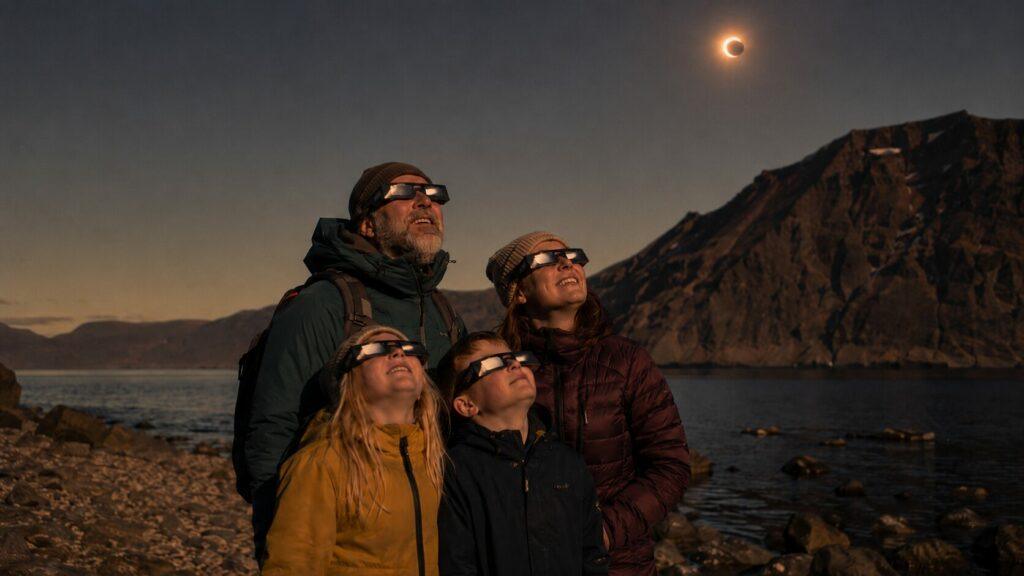
To look directly at the Sun, use special eclipse glasses or a handheld solar viewer that complies with the ISO 12312-2 international safety standard.
When Can You Look Without Eclipse Glasses?
You may look at the eclipse without eclipse glasses only during the brief period of totality, and only if you are in the path of a total solar eclipse. Totality happens when the Moon completely covers the bright face of the Sun.
If you are watching a partial solar eclipse, you must use proper eye protection the entire time. If you are watching an annular solar eclipse, you must also use proper eye protection the entire time, because the bright ring of the Sun remains visible.
As soon as totality ends and even a tiny part of the bright Sun reappears, you must put your eclipse glasses back on immediately.
How to Use Eclipse Glasses Correctly
Eclipse glasses are easy to use, but they must be handled properly.
- Check the glasses before the eclipse. Do not use them if they are scratched, torn, punctured, loose, or damaged.
- Put the glasses on before looking up at the Sun.
- Keep the glasses on while looking at the Sun.
- Look away from the Sun before removing the glasses.
- Supervise children closely and make sure their glasses fit securely.
Do not walk, drive, or move around while wearing eclipse glasses. They block almost all normal light, so you may not see obstacles, steps, traffic, or other people clearly.
Buy Eclipse Glasses From a Trusted Source
Safe eclipse glasses should meet the ISO 12312-2 standard, but the label alone is not enough if the product comes from an unknown or unreliable seller. Counterfeit or poor-quality eclipse glasses can look convincing.
Buy eclipse glasses from reputable suppliers, astronomy shops, science centers, observatories, or trusted event organizers. Avoid last-minute purchases from random online listings, especially if the seller does not clearly identify the manufacturer.
Safe Viewing for Children
Children need extra supervision during an eclipse. They may be excited, distracted, or tempted to peek around the edges of eclipse glasses.
Before the eclipse begins, explain the rules in simple language:
- Do not look at the Sun without eclipse glasses.
- Put the glasses on before looking up.
- Look down before taking the glasses off.
- Do not use damaged glasses.
- Ask an adult for help before using binoculars, telescopes, or cameras.
For younger children, indirect viewing methods such as pinhole projectors may be safer and easier to manage.
Indirect Viewing: A Safe Alternative
You do not have to look directly at the Sun to enjoy an eclipse. Indirect viewing is a safe and simple option, especially for families, schools, and public events.
A pinhole projector lets sunlight pass through a small hole and project an image of the eclipsed Sun onto a surface. You can make one with cardboard, paper, or even use the small gaps between leaves on a tree. During a partial eclipse, the projected spots of sunlight may appear as tiny crescent shapes.
Never look through the pinhole at the Sun. The point is to look at the projected image, not through the hole.
Using Cameras, Binoculars, and Telescopes Safely
Cameras, binoculars, and telescopes require special care. Looking at the Sun through an optical device without a proper solar filter can cause serious eye injury very quickly.
Eclipse glasses are not enough when using binoculars, telescopes, camera lenses, or spotting scopes. These devices concentrate sunlight and can damage both your eyes and your equipment.
Use a proper solar filter mounted securely on the front of the lens, telescope, or binoculars before sunlight enters the optical system. Do not place a filter only near the eyepiece unless the equipment manufacturer specifically designed it for that use.
Solar Filters for Photography
If you plan to photograph the eclipse, protect your camera as well as your eyes. A strong telephoto lens pointed at the Sun can focus intense light onto the camera sensor.
Use a certified solar filter on the front of the lens during all partial phases. Remove the filter only during totality, and only if you are photographing a total solar eclipse from inside the path of totality. Replace the filter before totality ends.
Practice this process before eclipse day. Totality may last only a few minutes, and you do not want to be learning your equipment during the most important moment.
Safety During Totality
Totality is the only moment when the Sun’s bright disk is fully covered by the Moon. During this short period, observers in the path of totality can look at the eclipse without solar viewers and see the solar corona.
Still, timing matters. Know the exact local start and end times of totality for your viewing location. Use a reliable eclipse app, printed timetable, or announcement from an organized event.
When totality is about to end, stop looking directly at the eclipse and put your eclipse glasses back on before the bright Sun returns.
Common Eclipse Safety Mistakes
Many eclipse safety problems come from simple mistakes. Avoid these common errors:
- Using regular sunglasses instead of eclipse glasses.
- Buying eclipse glasses from an unknown seller.
- Using scratched or damaged eclipse viewers.
- Looking through binoculars or a telescope while wearing eclipse glasses.
- Removing eye protection too early before totality.
- Forgetting to put eye protection back on when totality ends.
- Letting children observe without close supervision.
- Trying to take photos through an unfiltered camera or phone lens.
Travel Safety Tips for Eclipse Observers
If you are traveling to see an eclipse, plan your safety supplies before you leave. Eclipse glasses may sell out near popular viewing locations.
- Pack eclipse glasses for every person in your group.
- Bring a few spare pairs in case one gets damaged.
- Keep glasses flat and protected in your luggage.
- Carry a printed schedule of eclipse times for your location.
- Arrive early to avoid rushing your setup.
- Bring water, sunscreen, a hat, and weather-appropriate clothing.
- Choose a viewing spot away from traffic and unsafe edges.
- Do not drive while watching the eclipse.
Large eclipse events can attract crowds and traffic. Give yourself enough time to reach your viewing site, set up equipment, and review safety rules with your group.
What to Do If You Think You Looked at the Sun Unsafely
If you accidentally looked at the Sun without proper protection and notice blurred vision, dark spots, distorted vision, or changes in color perception, contact an eye care professional as soon as possible.
Do not try to diagnose the problem yourself. Eye symptoms after unsafe solar viewing should be taken seriously, even if there is no pain.
Quick Eclipse Safety Checklist
- Use eclipse glasses or handheld solar viewers that meet ISO 12312-2.
- Do not use regular sunglasses.
- Inspect eclipse glasses before use.
- Put glasses on before looking at the Sun.
- Look away before removing glasses.
- Use solar filters on cameras, binoculars, and telescopes.
- Use indirect viewing methods if you do not have safe glasses.
- Supervise children at all times.
- Know the exact timing of totality if you are watching a total solar eclipse.
- Replace eye protection immediately when totality ends.
Conclusion
A solar eclipse is one of the most beautiful natural events you can witness, but safe viewing must come first. Use proper eclipse glasses, avoid homemade filters, protect cameras and optical equipment, and supervise children carefully.
The safest eclipse experience is the one you prepare for in advance. With the right protection and a clear plan, you can enjoy the eclipse confidently and focus on the rare view unfolding in the sky.
Frequently Asked Questions About Eclipse Viewing Safety
Can I watch a solar eclipse with regular sunglasses?
No. Regular sunglasses are not safe for looking directly at the Sun during a solar eclipse. Use eclipse glasses or a handheld solar viewer that meets the ISO 12312-2 standard.
Can I look at the Sun during totality?
You can look without eclipse glasses only during the brief period of totality in a total solar eclipse, and only when the Sun is completely covered by the Moon. This does not apply to partial or annular eclipses.
Are eclipse glasses enough for binoculars or telescopes?
No. Do not look through binoculars, telescopes, cameras, or spotting scopes while wearing only eclipse glasses. Optical devices need proper solar filters mounted on the front of the equipment.
What should I do if my eclipse glasses are scratched?
Do not use scratched, torn, punctured, or damaged eclipse glasses. Replace them with a safe pair from a trusted source.
Is a pinhole projector safe?
Yes, a pinhole projector is a safe indirect viewing method when used correctly. Look at the projected image of the Sun, not through the pinhole at the Sun.