Фотографування сонячної корони це один із найзахопливіших викликів у тревел-фотографії. Корона є зовнішньою атмосферою Сонця, видимою неозброєним оком лише протягом коротких митей повного сонячного затемнення. Для багатьох мандрівників побачити її це досвід, який трапляється раз у житті. Щоб зафіксувати її камерою, потрібні планування, безпека і простий, але надійний порядок дій.
Цей путівник охоплює основи для мандрівників, які хочуть фотографувати сонячну корону, не перетворюючи поїздку на складний технічний проєкт. Вам не потрібне найдорожче обладнання, але потрібно підготуватися до дня затемнення заздалегідь.
Що таке сонячна корона?
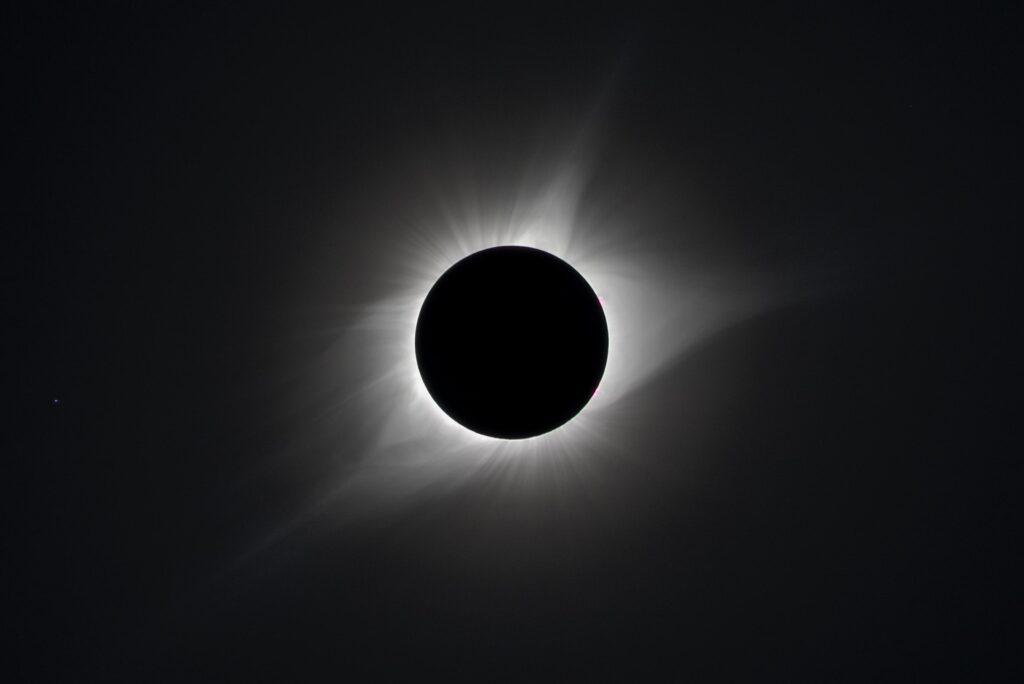
Сонячна корона це слабке, сяюче зовнішнє шару атмосфери Сонця. Під час повної фази, коли Місяць повністю закриває яскравий сонячний диск, корона з’являється як делікатні білі промені навколо темного Місяця.
Це зовсім не те саме, що фотографувати схід або захід Сонця. Корона слабка, світло змінюється швидко, а повна фаза може тривати лише кілька хвилин. Саме тому практика й підготовка важливіші за імпровізацію.
Безпека передусім: захистіть очі та камеру
Ніколи не дивіться прямо на Сонце без сертифікованих окулярів для спостереження сонячного затемнення або відповідного обладнання для безпечного спостереження Сонця. Звичайні сонцезахисні окуляри не є безпечними. Ваша камера також потребує захисту під час часткових фаз затемнення.
Використовуйте належний сонячний фільтр на об’єктиві щоразу, коли видима будь-яка частина яскравого Сонця. Фільтр має залишатися на місці протягом часткових фаз. Його можна зняти лише під час повної фази, коли Сонце повністю закрите Місяцем. Щойно повна фаза закінчується, негайно встановіть фільтр назад.
Важливе правило: немає повної фази, немає спостереження без фільтра і немає фотографування без фільтра.
Необхідне обладнання для фотографування сонячної корони
Сонячну корону можна фотографувати DSLR або бездзеркальною камерою, але правильні аксесуари значно полегшують процес.
- Камера: DSLR або бездзеркальна камера з ручним керуванням.
- Об’єктив: телеоб’єктив у діапазоні від 200 mm до 600 mm корисний для близьких знімків корони.
- Штатив: стабільний штатив необхідний, особливо при використанні довших фокусних відстаней.
- Сонячний фільтр: потрібен для всіх часткових фаз затемнення.
- Дистанційний спуск затвора: допомагає зменшити тремтіння камери.
- Запасні батареї та карти пам’яті: умови під час подорожі можуть бути непередбачуваними.
- Серветка для об’єктива: пил, волога та відбитки пальців можуть зіпсувати різкі знімки.
Трекінгове монтування може допомогти, але для початківців воно не є обов’язковим. Звичайного штатива достатньо, якщо ви заздалегідь потренуєте кадрування й налаштування камери перед затемненням.
Найкращі налаштування камери для фотографування сонячної корони
Не існує однієї ідеальної експозиції для сонячної корони, тому що її яскравість змінюється від внутрішньої корони до слабких зовнішніх променів. Найкращий підхід це використовувати брекетинг експозиції.
Почніть із таких базових налаштувань:
- Режим: ручний режим.
- Формат файлу: RAW.
- Діафрагма: від f/5.6 до f/8.
- ISO: ISO 100 до 400.
- Витримка: під час повної фази робіть брекетинг приблизно від 1/1000 секунди до 1 секунди.
- Фокус: ручне фокусування, ретельно налаштоване перед повною фазою.
Короткі експозиції фіксують яскраву внутрішню корону. Довші експозиції показують слабку зовнішню корону. Серія знімків із різними експозиціями дає більше гнучкості під час подальшої обробки.
Налаштуйте фокус перед повною фазою
Фокусування під час повної фази забирає дорогоцінний час. Налаштуйте фокус до того, як затемнення досягне повної фази. Використайте Сонце з установленим сонячним фільтром або сфокусуйтеся на віддаленому об’єкті перед подією. Коли фокус стане різким, перемкніться на ручне фокусування й уникайте торкання кільця фокусування.
Якщо ваш об’єктив має стабілізацію зображення, протестуйте її перед затемненням. На деяких об’єктивах стабілізація може допомагати при зйомці з рук, але на штативі може спричиняти проблеми. Потренуйтеся зі своїм обладнанням перед подорожжю.
Заплануйте композицію
Для близького виду корони використовуйте довгу фокусну відстань і тримайте Сонце в центрі кадру. Для ширшого знімка в тревел-стилі включіть краєвид, людей або місце спостереження затемнення. Обидва підходи можуть добре працювати, але вони потребують різних об’єктивів і налаштувань.
Якщо це ваша перша поїздка на затемнення, залиште комплект простим. Однією камерою на штативі керувати легше, ніж кількома камерами одночасно. Пам’ятайте, що ви там не лише для фотографування. Ви там, щоб пережити затемнення.
Поради для мандрівників щодо фотографування затемнення
Подорож додає ще один рівень планування. Погода, транспорт, натовпи та обмеження багажу можуть вплинути на вашу фотографію.
- Прибудьте на місце спостереження заздалегідь.
- Перевірте прогноз погоди й за можливості майте запасну локацію.
- Потренуйтеся швидко встановлювати штатив і камеру.
- Тримайте сонячний фільтр у легкодоступному місці.
- Під час авіаперельоту пакуйте обладнання в ручну поклажу.
- Візьміть роздрукований чекліст, а не лише нотатку в телефоні.
- Не розраховуйте купити батареї, фільтри або карти пам’яті на місці.
Виберіть місце з відкритим видом на небо. Уникайте місць, де будівлі, дерева або гори можуть закрити Сонце під час затемнення.
Простий порядок дій у день затемнення
Чіткий порядок дій допомагає залишатися спокійним, коли настає момент.
- Встановіть штатив і камеру задовго до початку затемнення.
- Закріпіть сонячний фільтр перед тим, як спрямувати об’єктив на Сонце.
- Ретельно налаштуйте фокус і перемкніться на ручне фокусування.
- Зробіть тестові знімки під час часткової фази.
- Підготуйте послідовність брекетингу експозиції.
- Зніміть сонячний фільтр тільки тоді, коли починається повна фаза.
- Фотографуйте корону, використовуючи різні витримки.
- Встановіть сонячний фільтр назад до завершення повної фази.
- Знайдіть мить, щоб подивитися на затемнення власними очима, використовуючи безпечні методи.
Поширені помилки, яких варто уникати
Найпоширеніша помилка це витрачати забагато часу на зміну налаштувань під час повної фази. Друга помилка це забути зняти сонячний фільтр під час повної фази, що може призвести до дуже темних знімків корони. Ще одна помилка це використання автофокуса, який може погано працювати в незвичних умовах освітлення.
Потренуйте весь процес удома. Встановіть штатив, закріпіть об’єктив, сфокусуйтеся вручну, змінюйте витримки й використовуйте дистанційний спуск. Що краще ваші руки знають обладнання, то спокійніше ви почуватиметеся під час затемнення.
Обробка фотографій сонячної корони
Файли RAW дають найбільшу гнучкість під час обробки. У постобробці обережно регулюйте експозицію, контраст, світлі ділянки й тіні. Уникайте надмірної обробки. Сонячна корона має природну, делікатну структуру, а занадто сильне різке підсилення або контраст можуть зробити зображення штучним.
Якщо ви зняли кілька експозицій, їх можна поєднати, щоб показати і яскраву внутрішню корону, і слабкі зовнішні промені. Це потребує більше навичок редагування, але може дати збалансованіше фінальне зображення.
Фінальний чекліст для мандрівників
- Камера з ручним режимом
- Телеоб’єктив
- Стабільний штатив
- Сертифікований сонячний фільтр для об’єктива
- Окуляри для спостереження сонячного затемнення
- Дистанційний спуск затвора
- Запасні батареї
- Додаткові карти пам’яті
- Серветка для об’єктива
- Роздруковані дані про час затемнення та локацію
- Запасний план спостереження
Висновок
Фотографування сонячної корони це рідкісний і незабутній досвід. Головне не ускладнювати свій комплект надмірно. Використовуйте безпечне обладнання, тренуйтеся перед поїздкою, підготуйте налаштування й збережіть простий порядок дій.
Хороша фотографія сонячної корони цінна, але сам досвід важить ще більше. Під час повної фази відірвіться від камери хоча б на кілька секунд і подивіться на небо. Цей спогад залишиться з вами надовго після того, як фотографії будуть оброблені.
Поширені запитання про фотографування сонячної корони
Чи можу я фотографувати сонячну корону смартфоном?
Смартфон може передати загальну атмосферу повного сонячного затемнення, але він не ідеальний для детальних фотографій сонячної корони. Для кращих результатів використовуйте камеру з ручними налаштуваннями та телеоб’єктив.
Чи потрібен сонячний фільтр для фотографування корони?
Сонячний фільтр потрібен під час часткових фаз затемнення. Фільтр слід знімати лише під час повної фази, коли Сонце повністю закрите Місяцем. Встановіть його назад до завершення повної фази.
Який об’єктив найкращий для фотографування сонячної корони?
Телеоб’єктив у діапазоні від 200 mm до 600 mm є хорошим вибором. Коротші об’єктиви можуть підійти для широких тревел-знімків, особливо якщо ви хочете включити краєвид.
Знімати в RAW чи JPEG?
RAW є кращим вибором, оскільки дає більше контролю під час редагування експозиції, контрасту й деталей корони.
Чи потрібен штатив?
Так, штатив настійно рекомендований. Він стабілізує камеру й допомагає точно кадрувати Сонце під час затемнення.